

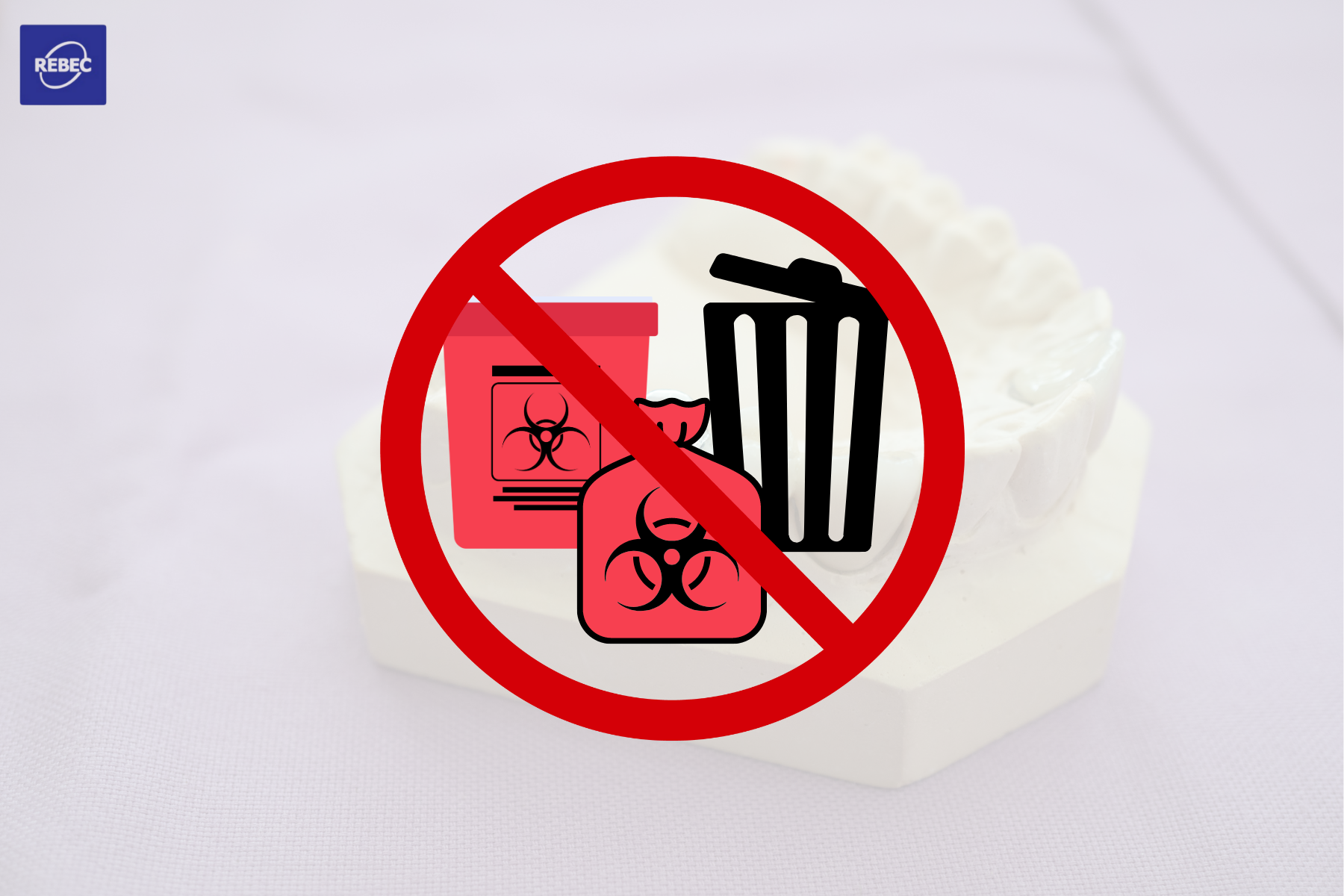
Extracted teeth are one of the more confusing waste items in a dental practice, because a single tooth can fall under two different rulebooks depending on one detail: whether it contains an amalgam filling. Get that distinction right and disposal is simple. Get it wrong — most commonly by tossing an amalgam-filled tooth into red-bag waste headed for an incinerator — and you’ve created a mercury problem. Here’s what the CDC and OSHA guidance actually says.
Start with the one question that decides everything
Before an extracted tooth goes anywhere, ask: does it contain amalgam?
- Tooth with an amalgam filling → handled as amalgam waste (mercury-bearing).
- Tooth with no amalgam → handled under the OSHA Bloodborne Pathogens Standard as potentially infectious material.
That single fork determines the correct path. Let’s take each.
Teeth WITH amalgam fillings
A tooth with an amalgam restoration is, for disposal purposes, a piece of amalgam waste. That means the two things you must not do:
- Do not place it in regulated medical waste that will be incinerated (red bags, sharps containers, or any stream ending at an incinerator). Burning amalgam releases mercury vapor into the air, which then settles back onto land and water. This is the exact outcome the whole amalgam-waste system exists to prevent.
- Do not heat-sterilize it. Autoclaving or any heat process vaporizes the mercury and can expose your staff — heat turns solid amalgam into mercury vapor.
Instead, an amalgam-containing tooth should be:
- Recycled as contact amalgam (the preferred route) — it goes in with your amalgam recycling stream, the same one your separator collector and scrap buckets feed, and the mercury is recovered.
- Or disposed of as hazardous waste through a licensed facility.
In practice, the easy answer is: an extracted tooth with a filling goes in the amalgam bucket, not the biohazard bin. If a service partner already handles your amalgam recycling, the tooth simply rides along with the rest of it.
Teeth WITHOUT amalgam fillings
A tooth with no amalgam isn’t a mercury issue — it’s an infection-control issue. Under OSHA’s Bloodborne Pathogens Standard, extracted teeth are considered potentially infectious material because they carry blood and tissue. Your options:
- Dispose of it as regulated medical waste through your normal medical-waste stream (this is where red bags / the medical-waste hauler are appropriate — for non-amalgam teeth).
- Or return it to the patient, if they ask.
The patient-return exception (a useful one)
Patients often want a tooth back — a child’s tooth for the tooth fairy, a wisdom tooth as a keepsake. The guidance is clear and practical: once an extracted tooth is returned to the patient, it’s no longer considered a risk to dental personnel and is no longer subject to the OSHA Bloodborne Pathogens Standard. It’s now the patient’s property.
One important caveat: this return exception is about infection control. It doesn’t erase the mercury concern. Many practices simply return teeth on request; if a tooth has a large amalgam filling, some clinicians talk the patient through it. Either way, you’re not incinerating it in your waste stream, which is the outcome the rules care about.
Teeth used for education
Extracted teeth used for pre-clinical training are their own small category. They should be cleaned of visible blood and debris and disinfected (or, for non-amalgam teeth, sterilized) before use, and stored appropriately. Teeth containing amalgam still should not be heat-sterilized, for the same mercury-vapor reason.
Don’t forget state and local rules
As with all dental waste, the CDC and OSHA guidance is the national baseline, and state and local regulations can be stricter. Some jurisdictions have specific handling or documentation rules for extracted teeth. Confirm your local requirements, and when they differ from the federal baseline, follow the stricter one.
Quick reference
- Amalgam filling present? → Amalgam recycling or hazardous waste. Never incinerate. Never heat-sterilize.
- No amalgam? → Regulated medical waste, or return to the patient on request.
- Returned to patient? → No longer OSHA-regulated; it’s theirs.
- For teaching? → Clean and disinfect; don’t heat amalgam-containing teeth.
- Always → Check state/local rules and follow the stricter standard.
Frequently asked questions
Can I put an extracted tooth with a filling in the sharps or biohazard container?
No, if the container’s waste is incinerated. Amalgam-containing teeth must be recycled as amalgam or disposed of as hazardous waste, because incineration releases mercury vapor.
Can I give a patient their tooth back?
Yes. Once returned, the tooth is no longer subject to the OSHA Bloodborne Pathogens Standard. Handle amalgam-filled teeth thoughtfully, but return on request is standard.
Do I autoclave extracted teeth before disposal?
Not if they contain amalgam — heat vaporizes mercury. Non-amalgam teeth for educational use can be sterilized; for disposal, follow your medical-waste process.
Sort by that one question — amalgam or no amalgam — and extracted-teeth disposal stops being confusing. The teeth with fillings ride your amalgam-recycling stream; the rest are routine medical waste or go home with the patient.
Rebec Environmental
Manufacturer of stainless steel amalgam separators, ADA-endorsed since 1995. Written for dental practices navigating amalgam compliance.