

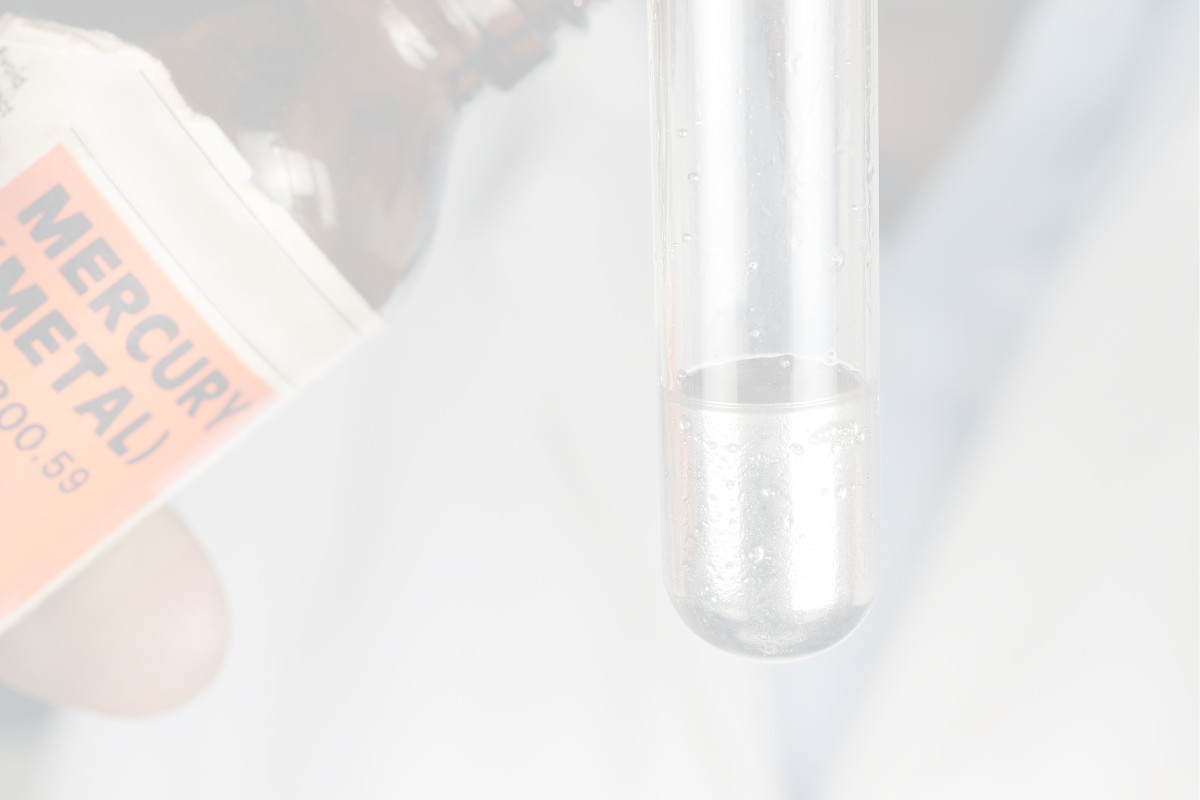
Dental amalgam has been used to fill teeth for more than 150 years because it’s durable, affordable, and easy to place. It’s also, by weight, roughly 50% elemental mercury, bound together with silver, tin, and copper. In a set filling, that mercury is locked in a stable alloy. The concern this guide addresses isn’t the filling in a patient’s mouth — that’s a clinical-safety question the FDA handles — it’s what happens to the scrap: the particles that come loose when amalgam is placed, polished, or drilled out, and where they go once they leave the chair.
That scrap is why amalgam waste is one of the most tightly regulated waste streams in dentistry. Here’s the real reason.
Where dental mercury actually goes
When amalgam particles wash down a chairside drain, they don’t stay put. Without a separator, they travel with the wastewater to the local sewage treatment plant — a publicly owned treatment works, or POTW. And treatment plants were never designed to capture mercury. Much of it passes straight through, either into the water discharged from the plant or into the sludge that plants later spread or landfill.
Once mercury reaches a waterway, biology takes over. Bacteria convert elemental mercury into methylmercury, a far more toxic form that dissolves into living tissue. Small organisms absorb it, bigger fish eat them, and the mercury concentrates at each step — a process called bioaccumulation. By the time it reaches the fish people eat, the concentration can be tens of thousands of times higher than in the surrounding water. This is the mechanism behind the fish-consumption advisories posted at lakes and rivers across the country.
Methylmercury is a potent neurotoxin. It’s especially dangerous to developing nervous systems, which is why pregnant women and young children are warned about certain fish. The dose from any one dental office is small — but it isn’t one office.
The scale: dentistry was the largest source
Here’s the number that explains why the federal government acted. Before amalgam separators were required nationwide, U.S. dental offices discharged an estimated 5.1 tons of mercury per year into sewage systems. That made dental practices the single largest source of mercury entering the nation’s treatment plants — ahead of any other identified contributor.
That’s not a knock on dentists. It’s a straightforward consequence of tens of thousands of offices each sending a little mercury down the drain, day after day, with nothing in between. Multiply a trace amount by roughly 103,000 amalgam-using offices and it adds up to tons. When the EPA finalized its Dental Effluent Guidelines, it estimated that requiring separators would cut that mercury discharge by essentially all of it — about 5.1 tons a year, plus another 5.3 tons of other metals in amalgam waste.
Why capture is the fix that actually works
Mercury is an element. You can’t neutralize it, filter it into something harmless, or break it down — it’s on the periodic table forever. That sounds bleak, but it’s actually why the solution is so clean: since you can’t destroy it, the entire job is to keep it contained and route it to recovery instead of the environment.
That’s exactly what a properly working amalgam separator does. It pulls the particles out of the wastewater before they ever leave your building, holds them in a sealed collector, and hands them off to be recycled — where the mercury is recovered and reused rather than released. Capture, containment, and recycling is the whole strategy, and it’s remarkably effective when the unit is sized right and actually serviced.
The failure mode is just as clear. A separator that’s full or undersized stops capturing efficiently, and the mercury starts slipping through again — which is why "we have a separator" and "we’re actually capturing the mercury" aren’t the same statement.
What responsible handling looks like
Handling dental mercury correctly comes down to a short list:
- Capture it at the source with a compliant separator sized to your practice’s volume.
- Never put it down a drain — not scrap amalgam, not chairside-trap contents, not the separator’s collector.
- Never incinerate or heat it — heat turns solid amalgam into mercury vapor, which is why amalgam-containing waste (including extracted teeth with fillings) doesn’t go in red-bag medical waste headed for an incinerator.
- Recycle it through a licensed facility that recovers the mercury, and keep the documentation.
We walk through each step, and who’s responsible for it, in the dental amalgam waste disposal compliance guide. And if you’re wondering why the rules are written the way they are, the EPA requirements guide covers the mandate itself.
The bottom line for your practice
The danger of mercury in dental amalgam isn’t abstract, and it isn’t about scaring anyone away from a proven filling material. It’s a specific, well-understood environmental problem: a heavy metal that persists forever, concentrates in the food chain, and once entered waterways from dentistry more than from any other source. The response is equally specific — capture the scrap, contain it, recycle it, document it.
Done right, none of that is a daily burden on your team. It’s a properly sized unit on the wall and a service partner who handles the waste and the paperwork. That’s the arrangement Rebec and its sister service, Pristine, have built for practices since 1995 — so the mercury goes to recovery, the records take care of themselves, and your office simply stays on the right side of a problem it helped solve.
Rebec Environmental
Manufacturer of stainless steel amalgam separators, ADA-endorsed since 1995. Written for dental practices navigating amalgam compliance.